If you’ve ever built a drone, you already know one truth: nothing fails more creatively than hardware under pressure. One broken port can destroy your plans. One wrong prop can destroy your frame. One script crash can destroy your score. And yet, at SUAS, we survived every failure—not because we built the perfect UAV, but because we built a team that could handle chaos.
With that mindset, we walked straight into our first lesson just one week before the competition. After days and nights of continuous work, we took our UAV out for a final testing flight. The team had been running on late nights, early mornings, and constant iterations to get everything ready on time. By then, exhaustion had quietly started catching up with us.
In that state of hurry and fatigue, we made a critical mistake: the propellers were mounted with the wrong
rotation
direction. The result was immediate. Thrust behaved unpredictably, stability was lost, and within seconds
the UAV
suffered serious damage. Both the arms and propellers were badly damaged, and for a moment, it felt like
weeks of
relentless effort had been undone just days before the competition.
But setbacks don’t decide outcomes—responses do. Through teamwork and our network of contacts, we managed to
arrange
new propellers in time and pulled ourselves back into the race.
Carrying that recovery momentum, we reached the competition venue and immediately began assembly. The plan
was
clear: fast setup, systematic checks, and smooth flights. But reality had other ideas. The moment our pilot
went
to charge the Herelink, he noticed it wasn’t charging. Our captain rushed in to troubleshoot—and that’s when
we
realized the real issue.
The micro-USB charging port had broken.
Suddenly, the pressure felt real. With the competition about to begin, a basic charging issue could have
ended
our run before it even started. But instead of panicking, the team switched straight into engineering mode.
We
removed the battery and started charging it manually by applying voltage. That workaround wasn’t elegant—but
it
worked. It became our strategy through compilation and testing, and once again, we moved forward.
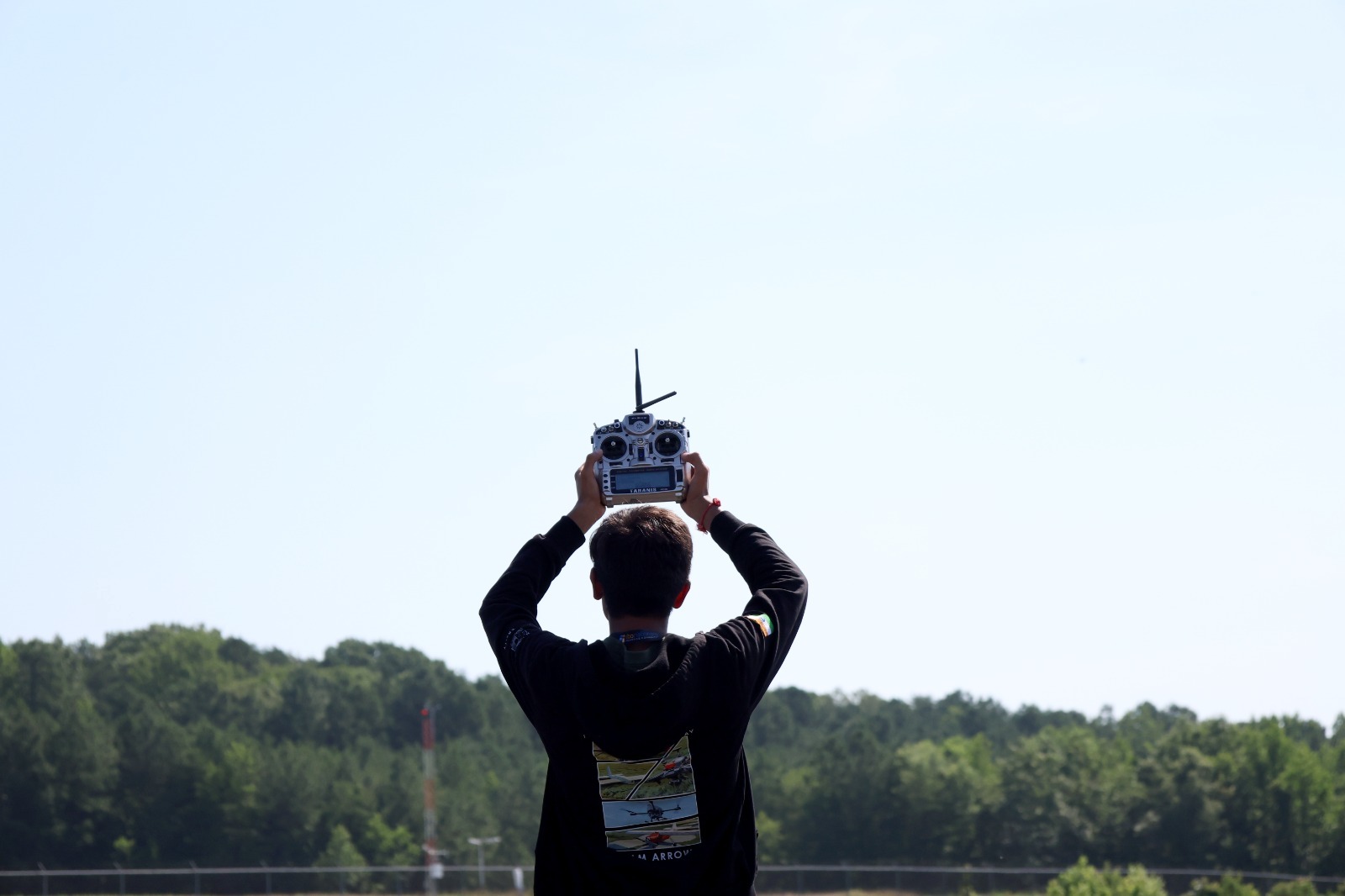
Just when things started stabilizing, another challenge showed up during the flights. Near the boundaries of
the
arena, our RC range dropped drastically and became unreliable at the worst possible moments. Software
couldn’t
fix this one.
So we improvised.
One of our team members stood right at the boundary, holding the RC in his hand and stretching his arm upwards, trying to squeeze every bit of range out of it. It might have looked funny to anyone watching—but in that moment, it mattered. That simple act helped us maintain connection and avoid unnecessary risk.
As if that wasn’t enough, trouble followed us into the fast assembly phase. During mounting, several
3D-printed
parts broke again. Earlier fixes using cyanoacrylate glue turned out to be a wolf in sheep’s clothing. Under
tool
pressure during the demonstration, parts cracked, briefly confusing the team and creating a dilemma
mid-performance.
Still, calm prevailed. The issue was fixed within five minutes, and we carried on without losing
momentum.
Then came the most stressful moment of all. Our automation script, meant to handle image downloading
mid-flight,
suddenly stopped working. Without those images, map generation—and our score—would collapse.
That’s when Bhavya (CS Operator) stepped up. Under extreme pressure, with shivering hands, he manually
downloaded
every image and generated the map successfully. Not everyone performs under pressure. Bhavya did.
And just when we thought we had seen it all, the final twist arrived mid-flight. The 3D-printed winch part
fell
from the copter, resulting in penalties. In numbers, it cost us 94.2 points. At that stage, all we could do
was
smile, shake our heads, and keep going.
Because by then, stopping was never an option.
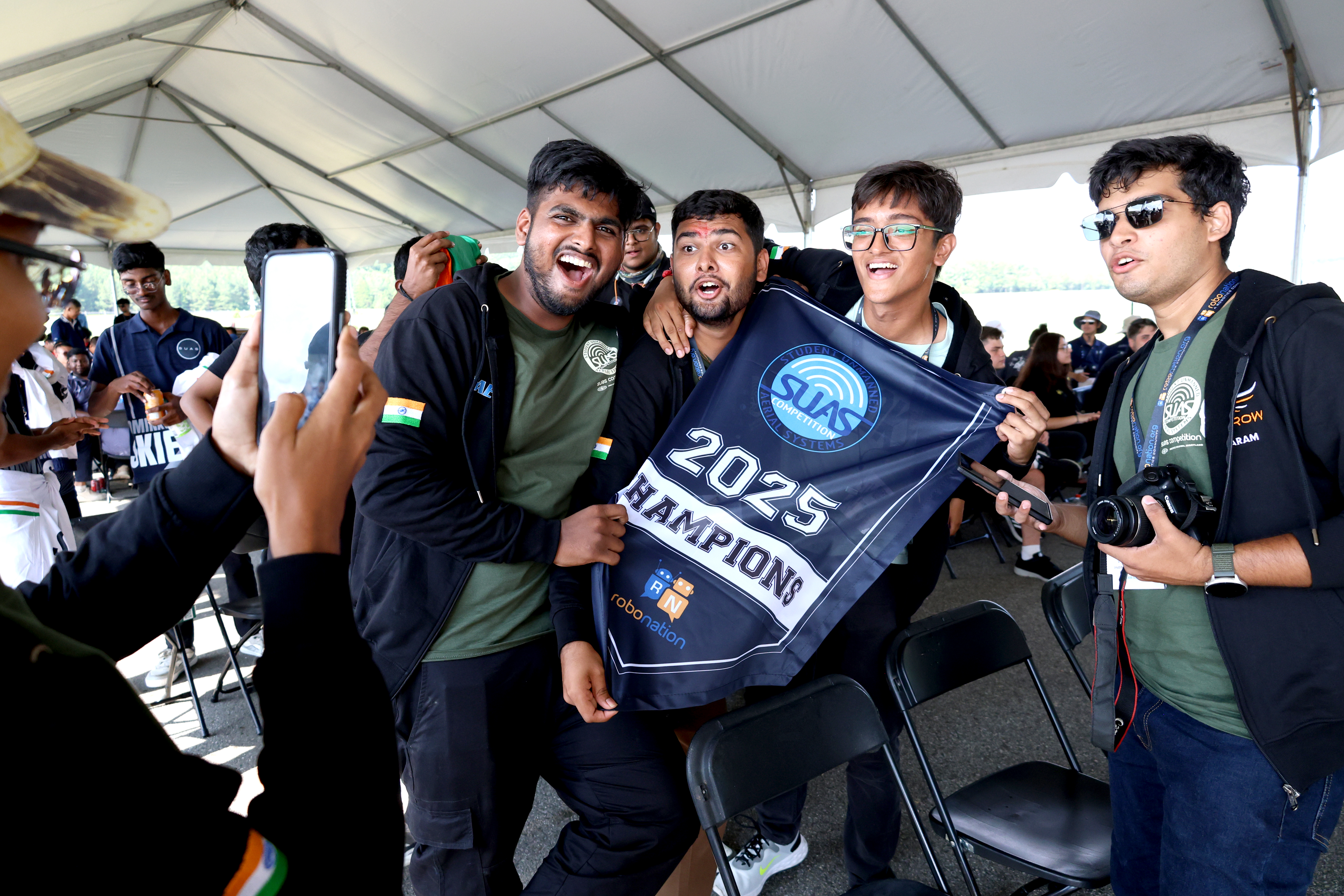
Even after crashes, broken ports, failing parts, script failures, RC range struggles, and penalties—we didn’t stop. We adapted, stayed calm, and kept executing. And at the end of it all, we stood there with a result that made every sleepless night worth it. We won with a 300-point margin. Not because everything went perfectly— but because we learned to perform perfectly when nothing did.
This achievement wasn’t just about our technical skills—it was about resilience, adaptability, and teamwork. We faced setbacks, rewrote flight algorithms overnight, and pushed the limits of what our UAV could do.